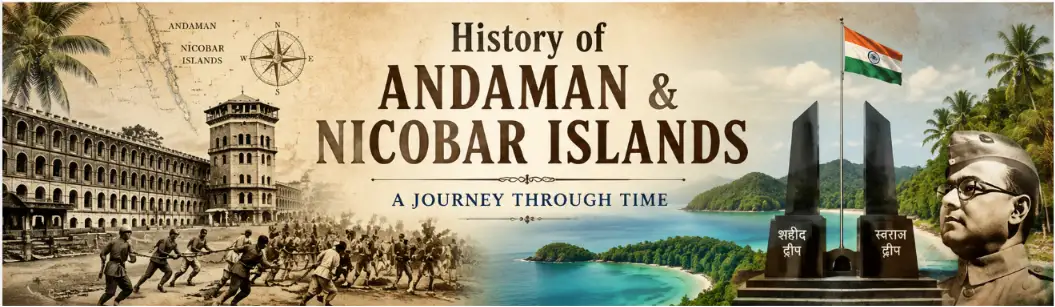
History of Andaman & Nicobar Islands – A Journey Through Time
The Andaman and Nicobar Islands are more than just a tropical paradise in the Bay of Bengal. Behind their crystal-clear waters, dense rainforests, and pristine beaches lies a fascinating history shaped by ancient civilizations, colonial powers, freedom fighters, indigenous tribes, and wartime events. Today, these islands stand as a symbol of India's cultural diversity, resilience, and natural beauty.
Ancient Origins and Early References
The history of the Andaman and Nicobar Islands dates back thousands of years. Historians believe that the islands have been inhabited by indigenous tribal communities for millennia. Ancient travelers and geographers mentioned these islands in their writings, though often under different names.
The name "Andaman" is believed to have originated from the Malay word "Handuman", referring to Hanuman, the revered character from the Indian epic Ramayana. Ancient Greek geographer Claudius Ptolemy referred to the islands in the 2nd century CE, while Arab traders and European explorers documented them during their maritime journeys across the Indian Ocean.
Indigenous Tribes: The Original Inhabitants
Long before modern settlements arrived, the islands were home to unique indigenous communities, including:
- Great Andamanese
- Jarawa
- Onge
- Sentinelese
- Nicobarese
- Shompen
These tribes developed distinct cultures, languages, and traditions while living in harmony with the islands' forests and coastal ecosystems. Even today, some communities continue to preserve their traditional way of life.
British Colonial Era and Penal Settlement
The modern history of the Andaman Islands began during British colonial rule. Following the Indian Rebellion of 1857, the British sought an isolated location to imprison revolutionaries and political prisoners.
In 1858, Port Blair was established as a penal settlement. Thousands of freedom fighters, revolutionaries, and convicts were transported across the sea to serve harsh sentences. The remote location made escape nearly impossible, earning the islands a reputation as one of the most dreaded prisons in British India.
The Construction of the Cellular Jail
One of the most significant landmarks in Indian history, the Cellular Jail, was constructed between 1896 and 1906. Designed to isolate prisoners, the prison consisted of seven wings radiating from a central tower, containing nearly 700 solitary confinement cells.
The jail became infamous for its harsh treatment of inmates. Many renowned Indian freedom fighters were imprisoned here and subjected to physical punishment, forced labor, and solitary confinement.
Today, the Cellular Jail stands as a National Memorial, reminding visitors of the sacrifices made by countless patriots during India's struggle for independence.
The Freedom Movement and Resistance
The Andaman Islands played a significant role in India's freedom struggle. Revolutionary leaders, political activists, and independence fighters from across the country were sent here by the British authorities.
The islands witnessed several acts of resistance, including prisoner protests and hunger strikes against inhumane conditions. The bravery and determination of these freedom fighters transformed the Cellular Jail into a symbol of courage and patriotism.
Visitors can now explore the museum, galleries, and the famous Light & Sound Show, which narrates the story of India's freedom movement through the experiences of the prisoners.
Japanese Occupation During World War II (1942–1945)
During World War II, Japanese forces occupied the Andaman and Nicobar Islands from 1942 to 1945. This period remains one of the most dramatic chapters in the islands' history.
On 30 December 1943, Netaji Subhas Chandra Bose visited Port Blair and ceremonially hoisted the Indian National Flag, making the islands the first Indian territory to be symbolically liberated from British rule. He renamed the islands:
- Shaheed Dweep (Martyr Island)
- Swaraj Dweep (Self-Rule Island)
This historic event remains a proud milestone in India's independence movement.
Integration into Independent India
After India gained independence in 1947, the Andaman and Nicobar Islands became a Union Territory of India. The government encouraged settlement from various parts of the country, leading to the diverse multicultural society seen today.
People from Bengal, Tamil Nadu, Kerala, Andhra Pradesh, Punjab, Ranchi region, and several other states migrated to the islands, creating a unique blend of cultures, languages, and traditions.
Today, Hindi, Bengali, Tamil, Telugu, Malayalam, and Nicobarese are widely spoken across the islands.
Cultural Diversity and Modern Development
The Andaman and Nicobar Islands are often described as "Mini India" because of their remarkable cultural diversity. Festivals such as:
- Durga Puja
- Diwali
- Pongal
- Onam
- Eid
- Christmas
are celebrated with equal enthusiasm.
Over the years, the islands have developed into one of India's most popular tourist destinations, attracting visitors with:
- Cellular Jail National Memorial
- Radhanagar Beach
- Ross Island (Netaji Subhas Chandra Bose Island)
- Havelock Island (Swaraj Dweep)
- Neil Island (Shaheed Dweep)
- Baratang Limestone Caves
- Barren Island Volcano
- Mangrove forests and coral reefs
Andaman Today: Where History Meets Paradise
Modern Andaman is a unique destination where history, nature, adventure, and culture come together. From the stories of ancient tribes and freedom fighters to the breathtaking beauty of turquoise waters and tropical forests, the islands offer an unforgettable journey through time.
Whether you are a history enthusiast, nature lover, photographer, or traveler, the Andaman and Nicobar Islands provide a rare opportunity to explore one of India's most extraordinary regions—where every beach, forest, and monument has a story waiting to be discovered.
AndamanBlogs.in Tip:
"The Andaman Islands are not just a destination; they are a living museum of India's history, freedom struggle, cultural diversity, and natural wonders."