Anthropological Museum Port Blair: Complete Visitor Guide
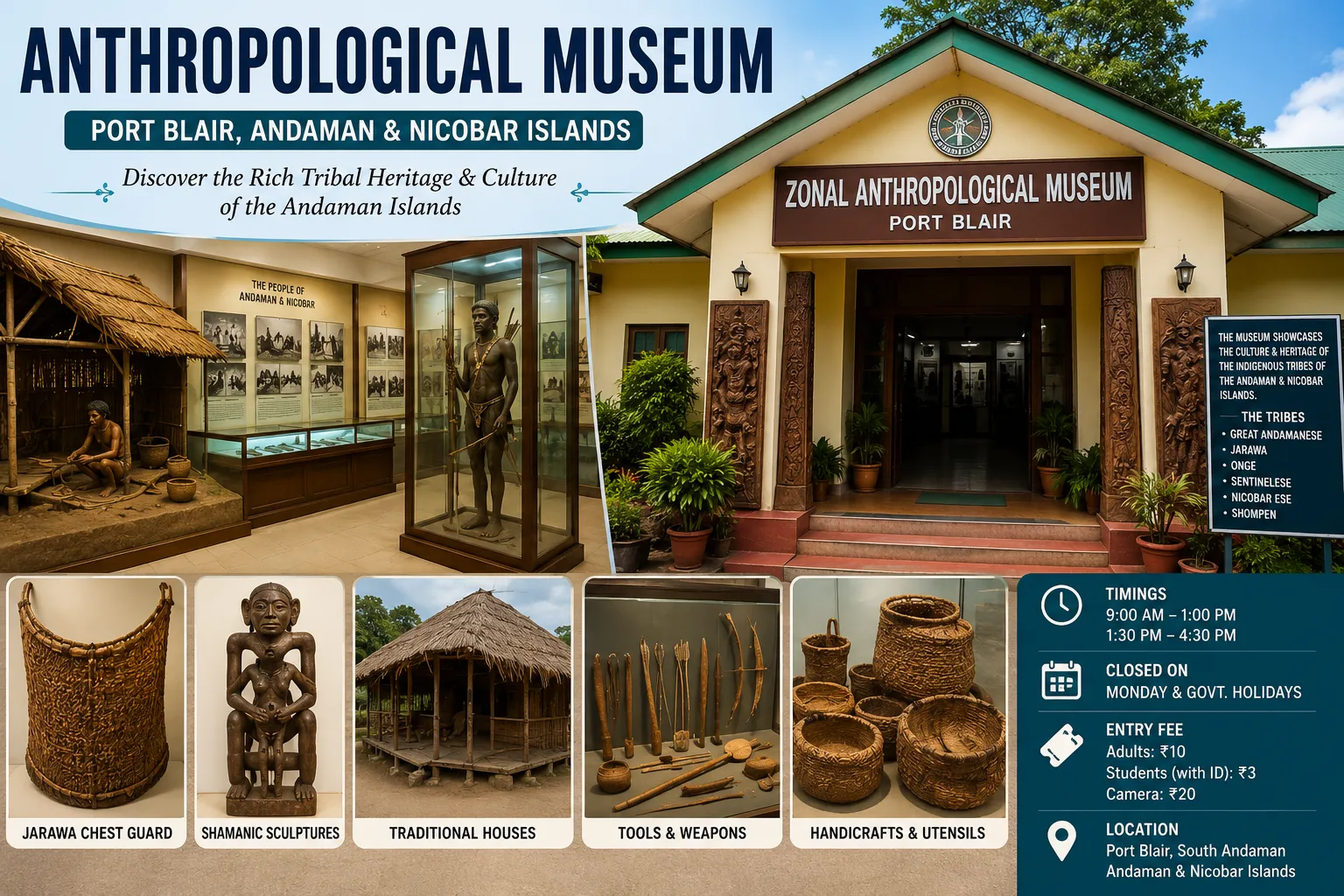
The Zonal Anthropological Museum in Port Blair (Sri Vijaya Puram) is one of the most interesting museums to visit in the Andaman & Nicobar Islands for travellers who want to learn about the region's indigenous communities, traditional culture and history.
Established in 1975, the museum provides visitors with an introduction to the traditional lifestyles, material culture and heritage of the indigenous communities of the Andaman and Nicobar Islands through photographs, models, artefacts and educational displays.
Unlike visiting protected tribal areas—which is restricted and subject to government regulations—the museum provides a respectful and accessible way for visitors to learn about indigenous cultures without entering protected communities or disturbing their way of life.
About Anthropological Museum Port Blair
The Anthropological Museum was established to document and present information about the indigenous communities of the Andaman and Nicobar Islands.
The museum features exhibits related to communities traditionally associated with the islands, including the Great Andamanese, Jarawa, Onge, Sentinelese, Nicobarese and Shompen.
Visitors can learn about traditional homes, clothing, tools, fishing and hunting equipment, ornaments, handicrafts, weapons and other aspects of traditional life.
The exhibits also provide historical and anthropological information about the communities and their relationship with the island environment.
Important: The indigenous communities of the Andaman & Nicobar Islands have different levels of contact with the outside world. Some communities live in protected areas, and visitors should never attempt to enter restricted tribal areas or make unauthorised contact.
What Can You See at Anthropological Museum?
The museum contains a variety of exhibits that help visitors understand traditional island life.
Some of the notable displays include:
- Traditional household equipment
- Models of traditional houses
- Handicrafts and artwork
- Traditional tools and weapons
- Fishing and hunting equipment
- Clothing and ornaments
- Historical photographs
- Cultural artefacts
- Shamanic sculptures
- Traditional community-life displays
- Information about the indigenous communities of the islands
The Jarawa chest guard and traditional cultural displays are among the exhibits that attract considerable interest from visitors.
Learn About the Indigenous Communities
The museum introduces visitors to the history and traditional lifestyles of communities associated with both the Andaman and Nicobar groups of islands.
Great Andamanese
The Great Andamanese are an indigenous group historically associated with the Andaman Islands. The museum provides information about their traditional lifestyle and material culture.
Jarawa
The Jarawa are an indigenous community of the Andaman Islands. Their traditional territory is protected, and unauthorised interaction with the community is prohibited.
The museum offers visitors an opportunity to learn about their traditional culture through exhibits and educational material.
Onge
The Onge are an indigenous community traditionally associated with Little Andaman. Their population and traditional way of life have been affected by historical changes and outside pressures.
Sentinelese
The Sentinelese live on North Sentinel Island and maintain an extremely limited contact with the outside world. North Sentinel Island is protected, and unauthorised visits or contact with the Sentinelese are prohibited.
The museum provides educational information about the indigenous communities without requiring visitors to enter protected areas.
Nicobarese
The Nicobarese communities are traditionally associated with the Nicobar group of islands. Their cultural practices, traditional homes and lifestyle form part of the broader anthropological history presented through museum resources.
Shompen
The Shompen are an indigenous community of Great Nicobar Island. They have traditionally maintained a relatively isolated lifestyle, and access to their areas is restricted.
Things to See and Do
1. Explore Traditional Houses
The museum uses models and displays to demonstrate traditional housing styles and the way different communities adapted their homes to the island environment.
2. See Traditional Tools and Weapons
Visitors can see examples of traditional tools, hunting and fishing equipment and other objects associated with daily life.
3. Learn About Traditional Clothing and Ornaments
Displays of clothing, ornaments and handicrafts provide an insight into traditional craftsmanship and cultural practices.
4. View Historical Photographs
Photographic displays provide historical context and help visitors understand the changes that have taken place in the islands over time.
5. Watch Educational Films
Depending on availability, documentaries and short films may provide additional information about the communities, their traditions and the cultural history of the islands.
6. Visit the Museum Shop
The museum has been associated with books, journals and publications relating to anthropology and the culture of the Andaman & Nicobar Islands. Availability may vary.
Anthropological Museum Timings
The commonly listed visiting hours are:
Morning: 9:00 AM – 1:00 PM
Afternoon: 1:30 PM – 4:30 PM
Weekly closure: Monday
The museum may also remain closed on government holidays. Timings and closure days can change, so it is advisable to confirm the latest information before visiting.
Anthropological Museum Entry Fee
Previously published information has listed approximate entry charges such as:
| Visitor | Fee |
|---|---|
| Adults | ₹10 |
| Students with ID | ₹3 |
| Camera | ₹20 |
Fees can change, so visitors should confirm the current entry fee at the museum before planning their visit.
How Much Time Do You Need?
You can comfortably explore the Anthropological Museum in approximately 1–2 hours.
If you are interested in history, anthropology and local culture, you may want to spend longer reading the information panels and examining the exhibits.
Best Time to Visit
The museum is an indoor sightseeing attraction, so it can be visited throughout the year.
For travellers visiting the Andaman Islands during the main tourist season, November to February is generally a comfortable period for combining museum visits with outdoor sightseeing.
During rainy weather, the museum can also be a useful addition to your Port Blair itinerary.
How to Reach Anthropological Museum
The museum is located in Port Blair (Sri Vijaya Puram) and can be reached by local transport.
You can travel by:
- 🚕 Taxi
- 🛺 Auto-rickshaw
- 🚌 Local bus
- 🚗 Private/rental vehicle
If you are staying in Port Blair, the museum can easily be included in a city sightseeing tour.
Who Should Visit the Anthropological Museum?
The museum is particularly suitable for:
- Families with children
- History enthusiasts
- Students
- Anthropology enthusiasts
- Culture and heritage travellers
- First-time visitors to Port Blair
- Travellers interested in the indigenous history of the islands
Important Visitor Guidelines
When learning about indigenous communities in the Andaman & Nicobar Islands, responsible tourism is extremely important.
Visitors should:
- Respect the privacy and dignity of indigenous communities.
- Never attempt unauthorised visits to protected tribal areas.
- Never approach, photograph or offer food/items to protected communities.
- Follow all government restrictions and local regulations.
- Learn about indigenous cultures through authorised museums and educational resources.
Nearby Places to Visit
You can combine the Anthropological Museum with other Port Blair attractions, depending on their opening days and timings:
- Cellular Jail
- Samudrika Naval Marine Museum
- Fisheries Museum
- Rajiv Gandhi Water Sports Complex
- Corbyn's Cove Beach
- Aberdeen Bazaar
This makes the museum a convenient stop during a Port Blair city sightseeing tour.
Is Anthropological Museum Worth Visiting?
Yes, especially if you are interested in the history and culture of the Andaman & Nicobar Islands.
The museum offers a valuable introduction to the indigenous communities and traditional cultures of the islands through exhibits, models, photographs and educational material. It is also an appropriate way for tourists to learn about communities whose territories and privacy must be respected.
For first-time visitors, spending 1–2 hours at the Anthropological Museum can add a cultural and historical dimension to an otherwise beach-and-water-activity-focused Andaman holiday.
Quick Information
| Information | Details |
|---|---|
| Name | Zonal Anthropological Museum |
| Location | Port Blair (Sri Vijaya Puram), Andaman & Nicobar Islands |
| Established | 1975 |
| Type | Anthropological & ethnographic museum |
| Focus | Indigenous communities and traditional culture |
| Recommended time | 1–2 hours |
| Commonly listed timing | 9:00 AM–1:00 PM & 1:30 PM–4:30 PM |
| Weekly closure | Monday |
| Best for | Families, students, history & culture enthusiasts |
| Best season | November–February for overall Andaman sightseeing |
AndamanBlogs is an independent travel and lifestyle informational portal. The information published on this page is provided for general reference and educational purposes.
Readers should verify important information such as government rules, permits, prices, schedules, availability, contact details and other official information with the concerned authorities or service providers before making decisions.
Plan Your Andaman Trip
Looking for hotels, tours, activities or travel assistance?